Reading the Label Like a Pharmacist: When Store Brands Match the Big Names—And When They Don't
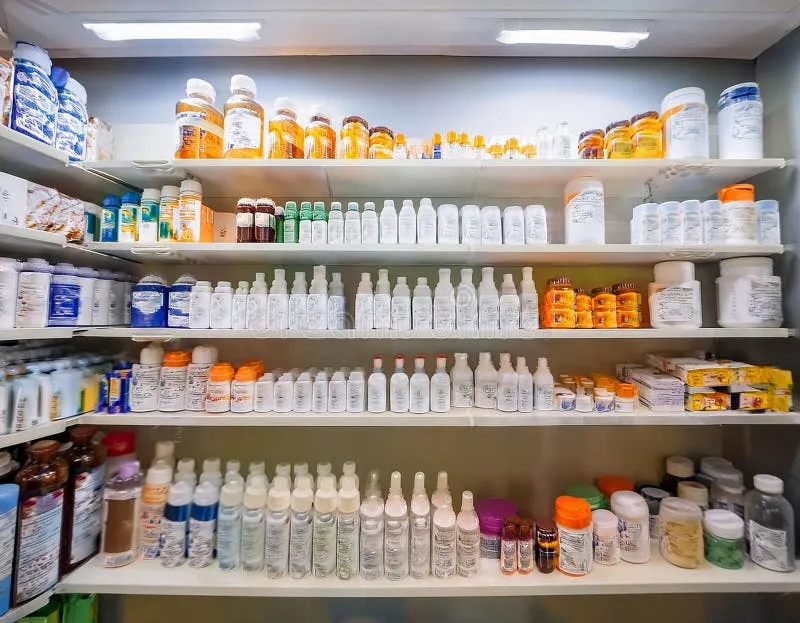
Photo: comparing two medication bottles side by side on pharmacy shelf, via thumbs.dreamstime.com
Walk down any pharmacy aisle in an American drugstore and you'll see it immediately: the same shelf stocked with a $14 name-brand product and a $4.50 store-brand twin sitting shoulder to shoulder. The packaging differs, the price differs, and for many shoppers, the assumption is that the expensive one must work better. Often, that assumption is wrong. Sometimes, though, it's right—and knowing which is which requires nothing more than the ability to read a label carefully.
The Federal Baseline: What Generic Drugs Must Prove
Over-the-counter medications in the United States are governed by FDA monographs—recipes, essentially, that spell out the acceptable active ingredient, dosage, and formulation for each drug class. Any ibuprofen tablet sold under any brand must meet the same monograph. The active ingredient must be the same, at the same strength, in the same dosage form.
That means store-brand acetaminophen is not a lesser cousin of the name version. It is, chemically, the same molecule. What can differ is the inactive ingredient list: binders, dyes, coatings, and fillers. For the vast majority of people, these differences are meaningless. For a smaller group—those with genuine dye allergies, celiac disease, or sensitivities to specific excipients—they can matter enormously.
Where Supplements Play by Different Rules
Here is where the picture shifts. Dietary supplements are not held to the same standard as OTC drugs. Under the Dietary Supplement Health and Education Act, manufacturers are responsible for their own safety and labeling accuracy, and no pre-market approval is required. A supplement labeled as containing 500 mg of a compound may contain more, less, or—in documented cases—something else entirely.
Independent verification programs exist precisely because of this gap. Seals from USP, NSF International, or ConsumerLab indicate that a third party has tested the product for identity, potency, and contaminants. A premium-priced supplement with no third-party verification may be worth less than a store-brand version carrying the USP mark. The price tag tells you nothing; the seal tells you something real.
A Shopper's Framework: Five Steps at the Shelf
Treat every purchase like a pharmacist would:
- Find the Active Ingredients section first. On Drug Facts labels it appears at the top. Compare it directly across products—same ingredient, same milligram amount, same dosage form means functional equivalence.
- Scan the inactive ingredients if you have sensitivities. Gluten, lactose, dyes, and gelatin hide here.
- Check the expiration date and lot number. Deep-discount products sometimes sit close to expiry.
- Look for third-party certification on supplements. USP, NSF, or ConsumerLab seals outweigh brand recognition.
- Calculate cost per dose, not cost per bottle. A larger container at a higher sticker price is frequently cheaper per tablet.
When the Premium Price Buys Something
There are legitimate reasons to pay more. Extended-release formulations require manufacturing precision that cheaper imitations of supplements (not FDA-regulated drugs) may not replicate. Combination products—say, a calcium supplement with vitamin D and magnesium in a specific ratio—vary meaningfully in formulation quality. And for enteric-coated or delayed-release products, the coating technology itself is part of what you're buying.
For plain, single-ingredient OTC medications, however, the evidence is unambiguous: the store brand delivers the same therapeutic result. The premium is largely paying for advertising.
The Bottom Line
The American pharmacy shelf rewards label readers. The active ingredient line is the great equalizer—where a $4 bottle and a $14 bottle become indistinguishable. Spend your scrutiny, and your money, where the differences actually live: supplement quality verification, inactive ingredients, and dosage forms. Your wallet will not notice the difference. Your body certainly won't either.